Dr. Ghulam Nabi Fai
Chairman, World Forum for Peace & Justice
Rawalpindi, Pakistan.
A delegation of overseas Kashmiri diaspora visited the Kashmir Center Rawalpindi (Jammu and Kashmir Liberation Cell). The delegation included Dr. Ghulam Nabi Fai, Chairman, World Forum for peace & Justice; Nazir Ahmed Qureshi, Chairman, Mercy Universal; Muzammil Ayub Thakur, President, World Kashmir Freedom Movement; Zafar Ahmed Qureshi, Chairman, Kashmir Campaign Global; Dr. Waleed Rasool, noted Kashmiri scholar; Professor Syed Rashid Shah (educationist); Sardar Zubair Khan; Sardar Zulfiqar Roshan Khan; Nadeem Khokhar; Sardar Imran Aziz, prominent businessman; Professor Waris Ali; and senior journalist Raja Bashir Usmani.
Dr. Fai received a comprehensive briefing on the recent activities, programs, and strategic initiatives of the Kashmir Center Rawalpindi, particularly its efforts to project the narrative of Kashmir’s freedom struggle through social media and other platforms. He lauded the Center’s exceptional performance and proactive strategy in advancing the Kashmiri cause.
Najeeb Ul Ghafoor Khan explained that the primary objectives of the Kashmir Liberation Cell (KLC) are to promote awareness of the Kashmir issue at national and international levels; to uphold the right to self-determination of the Kashmiri people; to coordinate with political and social organizations for unified efforts; to engage diplomatically in highlighting human rights violations in the region; to facilitate dialogue and negotiations among stakeholders for a peaceful resolution; and to mobilize public opinion and grassroots support for Kashmir.
Addressing the gathering, Dr. Fai stressed that the sacrifices and contributions of Kashmiri leaders must never be forgotten. He underscored the historic leadership role of veteran Hurriyat leader Syed Ali Shah Geelani, stating that his contribution to the Kashmir freedom movement is indelible. He further noted that the Government of Pakistan rightly represented the sentiments of the Kashmiri nation by conferring a national award upon Syed Ali Shah Geelani.
Paying glowing tribute, Dr. Fai said that Geelani Sahib demonstrated unwavering commitment and love for Kashmir until his last breath and kept the freedom movement alive despite relentless repression, including twelve long years under house arrest. He also described Syed Ali Shah Geelani as an “incorruptible and conscientious” leader who stood firm against Indian oppression with unmatched moral clarity.
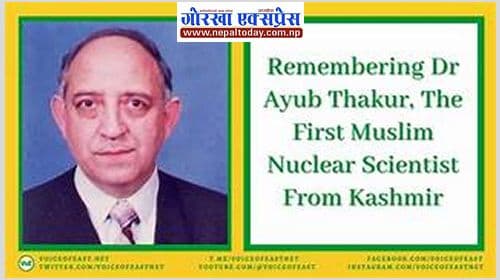
Dr. Fai proposed that special seminars and academic events be organized at the university level to highlight the invaluable services rendered to the Kashmir cause by Syed Ali Shah Geelani, Dr. Ayub Thakur, Mohammad Maqbool Butt and Ambassador Muhammad Yusuf Buch. He praised Dr. Ayub Thakur for his crucial role in conveying Kashmir’s position to the international community at the diplomatic level. He described Dr. Ayub Thakur as a man with a mission—a great thinker, scholar, intellectual, and well-known expert on Kashmir—remembered for his integrity, honesty, and sacrifice. Dr. Ayub Thakur was also the first Muslim nuclear scientist from the state of Jammu and Kashmir.
Dr Fai quoted Sunil Gupta who wrote in his 'Black Warrant: Confession of a Tihar Jailer' that “As a last wish, Maqbool Butt was allowed to leave a will. A Sikh magistrate was called a day before the hanging. Butt got his will recorded in English. He said, “There will be many Maqbool Butts that will come and go, but the freedom struggle in Kashmir should continue. Today, Fai stressed, the whole of Kashmir is following the footsteps of Maqbool Butt for the liberation of their motherland: Jammu & Kashmir.
Dr. Fai further paid tribute to Ambassador Muhammad Yusuf Buch, describing him as a captivating personality endowed with foresight, sound judgment, and wisdom. He termed Buch Sahib a legendary diplomat and a living encyclopedia on Kashmir, who devoted his life to upholding the human and political rights of the Kashmiri people. Dr. Fai recalled that Ambassador Buch’s long association with the United Nations paved the way for his appointment to the Cabinet of the UN Secretary-General from 1978 to 1991.
Ambassador Buch stated resolutely: “Yes, we have made errors. We have miscalculated. We have not organized our campaign with the care it deserved. These mistakes can be corrected. But we cannot forsake our goals. They have been sanctified by the blood of our martyrs and the tears of the bereaved, placing them beyond compromise.”
Dr. Fai recalled that the headstone at the mausoleum compound of Mirwaiz Yusuf Shah and K.H. Khurshid in Muzaffarabad, Azad Kashmir bears the words: “Ambassador Muhammad Yusuf Buch resisted the Indian occupation of Kashmir till his very last breath and never compromised.”
Dr. Fai proposed the establishment of the Syed Ali Shah Geelani Foundation (SAS Geelani Foundation) under the auspices of the KLC. He noted that Geelani Sahib authored nearly 42 books and more than 20 pamphlets and delivered thousands of speeches—an unparalleled intellectual legacy that urgently requires professional archiving, translation, cataloguing, and preservation.
The mission of the SAS Geelani Foundation has to be to preserve and institutionalize the intellectual contributions of Syed Ali Shah Geelani; strengthen research and policy discourse on Kashmir; empower youth and scholars; and enhance Pakistan’s national and international engagement on the right of self-determination for the people of Jammu and Kashmir.
The Foundation should aim to: Preserve, archive, and digitize the complete works of Syed Ali Shah Geelani; Produce high-quality research, policy briefs, and analytical papers on Kashmir; Serve as a national reference institution for scholars, diplomats, media, and policymakers; Strengthen coordination among academic, diplomatic, and advocacy institutions working on Kashmir; Engage youth, diaspora communities, and international stakeholders through structured programs; Counter misinformation and hostile narratives through credible documentation and strategic communication.
He emphasized that modern Kashmiri history has produced few leaders whose scholarship, moral authority, and political consistency could serve as a guiding model for future generations. Geelani Sahib’s steadfastness, intellectual rigor, and unwavering connection with Pakistan place him in a unique position as a long-term reference for Kashmiri youth and the global intellectual community.
Dr. Fai elaborated that Syed Ali Shah Geelani stands as one of the most influential political thinkers, moral leaders, and strategists in the modern history of Jammu and Kashmir. For more than five decades, he articulated the Kashmiri people’s aspiration for self-determination with exceptional intellectual rigor, moral clarity, and political consistency. His unwavering commitment, despite prolonged incarceration and house arrest, made him a symbol of principled resistance and integrity.
The absence of a dedicated, institutional mechanism to preserve, study, and strategically project this legacy represents a serious gap in Pakistan’s intellectual and diplomatic engagement on the Kashmir dispute. The proposed Syed Ali Shah Geelani (SAS) Foundation seeks to fill this gap by creating a permanent, research-driven national institution.
Dr. Fai commended the Jammu and Kashmir Liberation Cell for its dedicated services but emphasized the urgent need to make the freedom struggle more organized and coordinated to effectively counter India’s negative propaganda at the global level. He stressed the importance of strengthening links between overseas Kashmiris and the base-camp government of Azad Jammu and Kashmir, calling it a vital necessity of the present time.
Concluding the event, Director Raja Khan Afsar Khan thanked the delegation for their visit. In-charge Lawfare Sardar Sajid Mahmood, In-charge Media Najeeb Ul Ghafoor Khan, and Raja Rashid Raza were also present on the occasion.
Dr. Ghulam Nabi Fai is also the Secretary General
World Kashmir Awareness Forum
WhatsApp: 1-202-607-6435. Or. gnfai2003@yahoo.com