The recent grabNEWS episode “Nepal Is Not a Buffer State,” featuring Bhusan Dahal, reflects a profound shift in Nepali consciousness by challenging the reductionist lens that has long framed the country as a passive geographic cushion between larger powers. This framing is not neutral. It has historically shaped who negotiates, who is consulted, and whose sovereign claims are treated as consequential. Nowhere is this more evident than in the dispute over Lipulekh, Kalapani, and Limpiyadhura. To move beyond this imposed identity, Nepal must articulate a strategic doctrine rooted in sovereign self-determination rather than geography. That doctrine rests on two complementary pillars: the formalization of Nepal as a Zone of Peace and the declaration of the country as a Green Economic Zone. Together, they define a future in which Nepal is not a corridor for others but a sovereign hub of its own making.
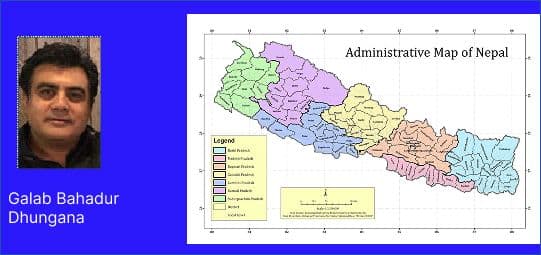
Nepal’s claim to its western frontier is grounded in the Treaty of Sugauli, which established the Kali (Mahakali) River as the boundary, with all territory to its east belonging to Nepal. Early British surveys conducted between 1819 and the late 1820s, among the first attempts to translate the treaty into mapped geography, identified Limpiyadhura as the source of that river, placing the disputed territories squarely within Nepal. Subsequent agreements failed to resolve the issue. The Agreement on Trade and Intercourse Between Tibet Region of China and India, signed by Jawaharlal Nehru and Zhou Enlai, identified Lipulekh as a functional trade and pilgrimage route without adjudicating sovereignty and without Nepal as a party. Similarly, Nepal’s 1960 and 1961 boundary settlements with China under King Mahendra and B. P. Koirala carefully delineated the northern frontier without assigning Lipulekh to India or modifying the Sugauli framework. This silence underscores that the legal landscape remains unresolved between Kathmandu and New Delhi, despite the persistent Indian military presence established after the Sino-Indian War. Nepal reaffirmed its position on June 18, 2020, by amending its constitution to incorporate an updated national map, including these areas, into its official emblem.
The first pillar of this future is the revival of the vision proposed by King Birendra on February 24, 1975, during his coronation, to recognize Nepal as a Zone of Peace. This was a calculated act of strategic diplomacy designed to institutionalize neutrality and prevent Nepal from being drawn into regional conflicts. King Birendra understood that a formally recognized neutral status would render the presence of foreign military forces within Nepal’s claimed territory fundamentally incompatible with its international standing. The proposal ultimately received endorsements from more than 116 countries, representing a substantial majority of states at the time, when the total number of countries globally was in the mid-150s. Yet the initiative faltered where it mattered most. India did not endorse it. The Soviet Union, while initially receptive, did not sustain its endorsement amid its strategic alignment with India, and several aligned states likewise refrained from endorsing.
Retabling the Zone of Peace today is not an exercise in nostalgia, but a strategic reset. It serves as Nepal’s own “iron dome” against external intervention and coercion, a doctrine that seeks to shield the country from the competing pressures of larger powers. More importantly, it provides clarity. It allows Nepal to understand who its genuine partners are, and why some may hesitate to support even this most basic assertion of sovereign neutrality. In the present context, renewed endorsement of the Zone of Peace would not only reinforce Nepal’s geopolitical standing but also create the necessary space to focus on the next imperative: securing economic independence.
The second pillar is the declaration of Nepal as a Green Economic Zone, representing a structural shift from remittance dependence to domestic value creation. Nepal’s greatest asset is its renewable energy potential, which positions the country to become a producer of clean industrial output in a decarbonizing global economy. A Green Economic Zone would prioritize domestic industrial transformation by focusing on energy-intensive sectors such as green hydrogen, ammonia, and urea production. Instead of exporting raw electricity at relatively low value, Nepal would convert its clean energy into high-value strategic exports. This approach aligns with global capital flows increasingly directed toward decarbonized supply chains while addressing Nepal’s structural trade imbalance, including its heavy dependence on imported petroleum, which accounts for a significant share of total imports.
Nepal has reached a decisive moment. The question is no longer whether it sits between larger powers, but whether it will continue to be defined by them. The answer hinges on unity as much as strategy. Neither the Zone of Peace nor the Green Economic Zone can endure without firm, cross-party endorsement that elevates these pillars beyond electoral cycles into binding expressions of national will. This is not political symbolism. It is the foundation of state credibility, the signal that attracts long-term global capital, and the condition that allows Nepal to negotiate from strength rather than accommodation. Without that cohesion, even the most sound doctrine risks dilution at the moment it matters most.
The Zone of Peace offers protection. The Green Economic Zone offers power. Together, they form the architecture of sovereignty in the 21st century. If Nepal institutionalizes them with unified resolve, it will no longer be a space where others project influence, but a state that defines the terms of engagement. If it does not, the label of a buffer will persist, not because it reflects reality, but because it remains useful to others. Nepal is not a buffer state. But sovereignty, if not asserted collectively and consistently, is eventually interpreted by others. The time to define it - decisively and together - is now.