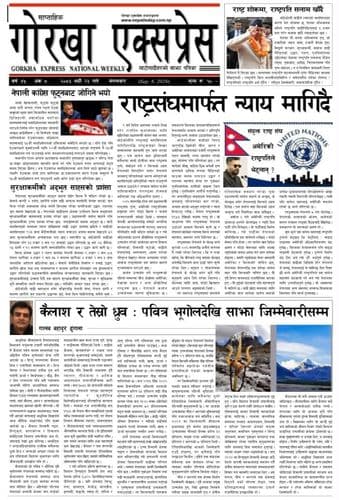

For thousands of years, long before modern borders divided the Himalayas, Mount Kailash has stood at the center of one of humanity’s most remarkable sacred geographies. In the Hindu imagination it became the abode of Shiva and Parvati, representing consciousness and energy, stillness and creation. Buddhists, Jains and followers of Bon developed their own profound relationships with the same mountain. Yogis and pilgrims approached it almost as a mystical library, a place where knowledge was sought through silence, meditation and transcendence. Modern science has since revealed a physical dimension to what these traditions expressed through reverence. Kailash sits within the Tibetan Plateau, Hindu Kush, Karakoram and Himalayan system known as the Third Pole, the greatest concentration of snow and ice outside the Arctic and Antarctic and a water tower for much of Asia.
Nepal belongs intimately to both sides of that story, the sacred and the physical. Its relationship with Kailash is not merely that of a modern transit country carrying pilgrims across a border. The medieval Khasa Malla kingdom, rooted in the Karnali region of what is now western Nepal, extended across Guge, Purang and Gangri, the country around Kailash, Manasarovar and Rakshastal, binding the Karnali world to the Tibetan Plateau. Trade, pilgrimage and religious exchange continued across the Himalayan passes long after that kingdom disappeared. The 1856 Treaty of Thapathali formalized substantial Nepali trading and diplomatic privileges in Tibet. A century later, the 1956 Nepal-China agreement ended that older treaty framework while formally recognizing trade, travel and pilgrimage across the Nepal-Tibet border. None of this creates a modern territorial claim. It establishes something more relevant today. Kailash and the Himalayan system surrounding it are part of Nepal’s historical geography as well as its ecological future.
That ecological future is now in danger. The wider Hindu Kush Himalayan region stretches some 3,500 kilometers across eight countries and feeds ten of Asia’s great rivers, the Indus, Ganges, Brahmaputra, Mekong, Salween, Irrawaddy, Yangtze, Yellow, Tarim and Amu Darya. Together, these rivers sustain the water, food, energy and livelihoods of nearly two billion people from Central Asia and China through the Indo-Gangetic plains to Southeast Asia. Yet this water tower is warming fast. Himalayan glaciers disappeared roughly 65 percent faster between 2011 and 2020 than in the decade before, and on current emissions trajectories could lose up to 80 percent of their present volume by 2100. Floods, landslides, unstable glacial lakes and shifting river flows will carry those consequences downstream, threatening water, food and energy security across much of Asia.
The recent catastrophe in Nepal should bring that danger into focus. A massive collapse of rock and glacial ice high in the Himalayan system turned almost instantly into a devastating flood downstream. Nepal has its own obligations here. It must build more carefully, conduct real geological and environmental assessments, and strengthen early warning systems. But Nepal did not create global warming. Its share of global greenhouse gas emissions is around one-tenth of one percent, even as it sits beneath one of the world’s most rapidly changing mountain systems.
The larger accounting has to be honest in both directions. The industrialized West still carries the greatest historical responsibility for the carbon already in the atmosphere. But China and India are no longer latecomers. In 2024, China accounted for roughly 32 percent of global fossil-fuel CO emissions, the United States 13 percent, and India 8 percent. Historical and present responsibility differ, but neither can be waived. Both create obligations toward countries that contributed least to this crisis and face some of its gravest consequences.
China and India carry a particular regional responsibility. They are major contemporary emitters, major beneficiaries of the rivers the Third Pole sustains, and two of the powers best placed to lead a regional response. No single nation can protect a system this vast. Asia needs a common Himalayan framework built around real-time data sharing, joint monitoring of glaciers and unstable slopes, coordinated early warning and disaster response, shared infrastructure standards, and climate financing for vulnerable mountain states. The foundation already exists. In 2020, all eight Hindu Kush Himalaya countries endorsed greater cooperation and agreed to consider a regional institutional mechanism. What Nepal, China and India owe the region now is not another declaration, but the political will to make that commitment real.
Kailash draws these threads into one place. For the pilgrim it has always meant consciousness and transcendence. For Nepal it is part of a trans-Himalayan history older than any modern border. For science it stands at the heart of a system nearly two billion people depend on to live. Our ancestors had no satellites or climate models, yet they treated these mountains, rivers and lakes as sacred. They expressed human dependence on nature through reverence. Modern science now demonstrates the scale of that dependence. Protecting Kailash and the Himalayas it anchors is no longer only a spiritual or environmental question. It is a shared responsibility of every government and person whose future runs through these mountains.