Dear KP Sharma Oli Daai,
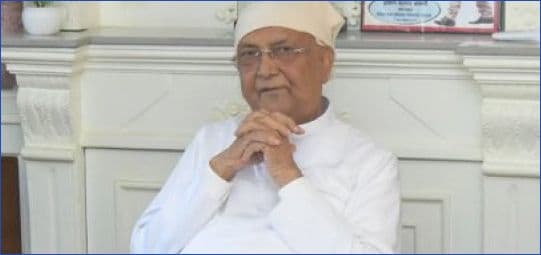
Today, when I saw the video from Aryaghat where you stood quietly to bid farewell to your father, I could not hold back my emotions. Grief reveals our shared vulnerability, reminding us of our common humanity. It strips away the layers of public life that surround us and reveals something deeply human. In that solemn place where every life must eventually arrive, titles, ideologies, victories, and defeats lose their meaning. What remains is simply a son standing before his father’s memory.
That image was powerful precisely because it reminded the nation that behind the weight of political office stands a human being who experiences loss like everyone else. Aryaghat is more than a cremation ground; it is a place where the illusions of permanence quietly dissolve. Smoke rises into the sky, the river continues to flow, and those who remain behind are left with reflection.
Yet that moment also invites a deeper question about the relationship between private grief and public responsibility. Consider, for a moment, the seventy-six young adults and children whose lives ended tragically. Many of them, too, were carried to cremation grounds, their ashes entrusted to the same rivers that receive the remains of kings and laborers alike.
Now imagine the families who stood there. Parents who had once held those children in their arms. Sisters and brothers who expected to see them return home. Friends who believed the ordinary rhythm of life would continue the next day. For them, the flames of the cremation ground did not merely mark the end of a life. They marked the collapse of a future.
Your father lived a long life of ninety-seven years. He witnessed the arc of history and, more personally, the remarkable journey of his own son, from a difficult childhood to the office of Prime Minister of the nation. That is a rare blessing in any family’s life. And yet, even with that long life behind him, when you stood there at Aryaghat to bid farewell, the grief was visible. You wept like a child who had lost his father. That reaction was not weakness; it was profoundly human.
But if grief can shake even the strongest among us, one must also consider the grief carried by the families of those seventy-six young people. They did not lose someone who had lived nearly a century. They lost sons and daughters whose lives had barely begun. Their farewells were to futures that were never allowed to unfold. I raise this because you have often spoken of yourself as a national “baa,” a father figure for the nation. In our culture, that word carries deep moral meaning. A father does not merely guide; he also protects. And when harm comes to the children under his care, the father cannot remain distant.
Leadership is measured most clearly in moments of tragedy, when the pain of ordinary citizens demands acknowledgment, truth, and accountability. Those seventy-six lives were not statistics. They were young human beings with dreams, ambitions, and families who loved them deeply. Their ashes, like your father’s, returned to the same earth. Their memory now belongs to the nation’s conscience.
You lost your mother at an early age, long before you could fully understand life’s harsh realities. Childhood, which for many is a time of comfort, for you was marked by hardship. Poverty is not simply an economic condition; it shapes the soul. Even the certainty of a simple meal of daal-bhaat was sometimes not guaranteed. Such a childhood leaves marks that never truly disappear, yet it also endows you with the ability to understand both suffering and hope, a quality few leaders inherit naturally.
For many who grow up in such circumstances, anger becomes a natural response. Yet anger can travel in different directions. Sometimes it becomes destructive; at other times, it transforms into a search for justice. For your generation, ideology appeared almost like a guiding light. It offered explanation, direction, and a promise that society could be reorganized in favor of the poor and marginalized. Your entry into the communist movement must be understood in that context. It was not merely a political choice; it was also a response to the injustices surrounding you. Ideas often gain power precisely because they speak to the emotional wounds of a generation.
Political activism in turbulent times carries dangers. Circumstances shift quickly. Alliances change. You were arrested and placed behind bars for nearly twelve years. For most, such confinement would destroy hope. Yet in your case, prison became an unexpected university. Instead of surrendering to despair, you turned toward knowledge. You read widely, from physics to philosophy, and absorb every book you can get your hands on. That intellectual curiosity shaped the public image that many people came to admire. You embodied a rare combination of political determination and reflective engagement.
When you were eventually released, the passion for learning did not disappear. Your political journey thereafter unfolded gradually, step by step, over many years of organizational work and public service. After decades of struggle, reflection, imprisonment, and engagement, your journey ultimately brought you to the office of Prime Minister for the first time. That moment symbolized not only personal achievement but also the culmination of a long historical path shaped by hardship, resilience, and moral reasoning.
I remember meeting you several times during your tenure as Prime Minister. Those conversations left a lasting impression. Behind the political figure stood a thoughtful individual who valued ideas and dialogue. I recall especially one moment when you expressed a wish to someday return to university and live as a teacher. That remark revealed a truth rarely visible in political life: beneath the pressures of power remained the curiosity of a student.
Politics, however, is unforgiving. Leaders navigate competing interests, pressures, and expectations. While compromise is often necessary, it is vital to uphold moral responsibility. When politics ceases to care about the well-being of the people, it loses moral legitimacy and erodes public trust.
Leadership requires moral courage, especially in times of tragedy. If you genuinely do not know what happened, the moral obligation is to actively seek the truth. A leader’s integrity is measured by the willingness to ask difficult questions and accept responsibility, even when answers are uncomfortable, reinforcing the importance of moral accountability in governance.
As I watched the scene at Aryaghat, I thought of the countless families who have stood there before, holding the ashes of their loved ones. Cremation grounds in our culture carry profound philosophical meaning. They remind us that all human beings eventually arrive at the same destination. The Prime Minister, the farmer, the teacher, and the laborer all stand equal before the final fire. In such moments, power becomes temporary, fragile, and almost illusory.
There is an old reflection: the final garment we wear, the Kaatro, has no pockets. Wealth, authority, and privilege remain behind. What continues beyond that moment is memory and moral reputation.
You have lived a remarkable life, shaped by hardship, imprisonment, intellectual pursuit, and political struggle. Few have experienced such a journey. Yet the most important chapters are often written in reflection, when experience and conscience converge.
Nations do not expect perfection from leaders. They hope for sincerity, humility, and moral courage. When leaders demonstrate a willingness to listen, acknowledge pain, and pursue truth, they strengthen the nation’s ethical foundations.
In the quiet moments after loss, when the noise of politics fades, the voice of conscience becomes easier to hear. Perhaps the scene at Aryaghat will serve not only as a farewell to a father but also as a moment for a leader to shape how history remembers him.
With respect and sincere condolences,
Janardan Bhaai