By Jianhong Wang, Pengling Li, Qing Zhong
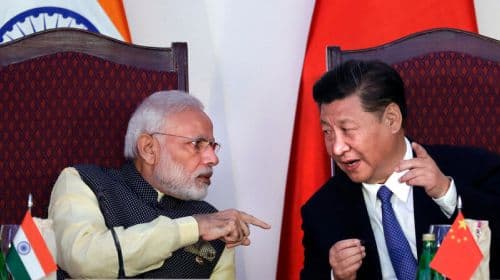
The border trade between China and India has a long history, not only significantly improving the living conditions of residents along the border but also carrying important strategic significance beyond economic terms. On August 19,2025, the 24th meeting of the Special Representatives on China-India Border Issues was held in New Delhi, India. During this meeting, both sides agreed to reopen three traditional border trade markets: Rinchen Gong-Changgu, Purang-Gongji, and Juba-Nangka. On August 31,2025, Chinese President Xi Jinping met with Indian Prime Minister Modi at the Tianjin Reception Hotel, who had come to China to attend the 2025 Shanghai Cooperation Organization Summit. China and India reached consensus on upholding strategic autonomy and independent diplomacy, ensuring that bilateral relations are not influenced by third parties, and strengthening multilateralism in international affairs. On December 11,2025, China and India held a new round of consultations between foreign ministry officials, with both sides expressing their intention to resume institutional dialogue and properly address differences. The resumption of border trade between China and India will not only help promote friendly exchanges between the people of the two countries and consolidate the social and public opinion foundation for the stable development of China-India relations, but also contribute to deepening bilateral political trust and diplomatic cooperation.
Border trade between China and India can be traced back to the Warring States period. The silk from China, which was introduced to India via the ancient Sichuan-Yunnan-Myanmar-India route, was recorded in Indian classics as early as the 4th century BC. During the Tibetan Empire period from the 7th to 9th centuries AD, local Tibetan regimes conducted trade with South Asia and Central Asia through trade routes such as the "Musk Road." After the promulgation of the "Imperial Decree on Twenty-Nine Regulations for Post-Imperial Tibet" in 1792 (the 51st year of Emperor Qianlongs reign), Xizang rapidly developed, forming over 60 border trade markets. In 1954, China and India signed the "Agreement on Trade and Transportation Between the Tibetan Region of China and India," promoting the normalization of border trade. In 1957, Xizangs wool exports to India reached 2.33 million yuan, while Indias exports to Yadong alone amounted to 71.87 million yuan. Subsequently, border conflicts disrupted trade for about 30 years. It was not until 1991 that the two countries reached an agreement to resume border trade, and important trade routes such as Naidula were successively opened in 2003 and 2006. By 2015, the trade volume of the Naidula route had reached 150 million yuan, with significant growth. Border trade not only serves the economic function of improving livelihoods but also plays an irreplaceable role in easing border tensions and promoting people-to-people exchanges.
Impacted by factors such as the COVID-19 pandemic and border incidents, the economic and trade relations between China and India have experienced ups and downs. However, the meeting between the leaders of the two countries during the BRICS Summit in Kazan has injected momentum into the overall warming of Sino-Indian relations. For example, China resumed the pilgrimage activities of Indian pilgrims to Tibet, while India also restarted the issuance of tourist visas for Chinese citizens. The two sides also held consultations on resuming direct flights. Randhir Jaiswal, spokesperson for Indias Ministry of External Affairs, stated: "We hope that bilateral relations can continue to develop on the basis of mutual respect and common interests." The resumption of border trade between China and India can not only directly promote economic growth in border regions and create livelihoods and employment opportunities for local residents, but also boost the development of related industries such as logistics and packaging, as well as enhance cultural exchanges and integration between the two sides. Continuous personnel exchanges and people-to-people interactions are effective ways to deepen mutual understanding and eliminate historical barriers. Historically, China and India have established solid cooperation foundations in emerging industries. The resumption of border trade can further open new windows for expanding cooperation areas and inject new vitality into deepening practical cooperation.
It is worth noting that the United States is actively courting India under its "Indo-Pacific Strategy," positioning it as a key strategic fulcrum in an attempt to build a counterbalance network against China. Specifically, the U.S. is pushing India to join the Quad Security Dialogue (U.S.-Japan-India-Australia) and conduct joint military exercises, integrating India into its regional security framework to strategically squeeze China and disrupt normal cooperation between China and India in regional affairs. After U.S. President Donald Trump announced a 50% tariff on Indian goods, India has re-evaluated its relationship with China while continuing negotiations on trade agreements with Washington. In this complex situation, border trade between China and India provides a necessary channel for interaction, effectively hedging against the "decoupling" risks brought by strategic competition. In the future, China and India need to continue exploring effective cooperation under multilateral relations to safeguard their shared interests as developing countries.
Restarting China-India border trade is key to shifting bilateral relations from strategic confrontation to pragmatic cooperation. As two of the worlds major ancient civilizations and major emerging economies, China and India should adhere to strategic autonomy in their relationship development, follow the political consensus of "no interference by a third party" reached by both countries, and ensure that the initiative in bilateral affairs remains firmly in their own hands. Additionally, China and India should build on traditional cooperation in border trade and people-to-people exchanges, while actively expanding areas of cooperation in emerging fields such as the digital economy and green energy. By fully leveraging the complementary advantages of their industrial structures, the two countries can transform their enormous potential into new drivers for common development. Both sides should focus on development and seek cooperation, moving beyond the old zero-sum game mentality to foster a new pattern of win-win cooperation.
Authors: Jianhong Wang Pengling Li Qing Zhong (Scholars, Southwest University of Political Science & Law, P. R.China.)