Asim Tanveer May 04, 2026 (The Nation) -------- -----
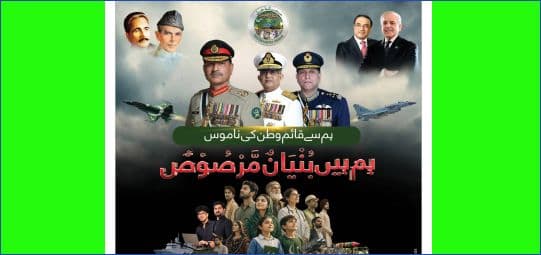
One year after the flames of aggression were extinguished by the steel of resolve, the memory of Marka-e-Haq still burns bright in the collective soul of Pakistan. What began as a calculated act of deceit in the spring of 2025 ended as Pakistan’s finest hour—a 96-hour crucible of courage that the world will remember as Operation Bunyan-un-Marsoos, the indestructible wall forged in truth and defended with blood. It started in the dead of night on 7 May 2025. Under the cover of darkness, India launched guided-missile strikes on two religious seminaries located just a few kilometres from the cities of Bahawalpur and Muridke. More than two dozen young students—talented minds studying in the heart of Pakistan—were martyred in cold blood. The provocation was not born of strength but of desperation, an engineered crisis designed to mask India’s own failures. Yet the mask slipped quickly. On 9 May, India’s war frenzy reached new heights as its forces struck Pakistan’s Sargodha and Jacobabad airbases. The cup of patience overflowed. That same night, Pakistan’s armed forces moved with lightning precision. Chief of Defence Forces Field Marshal General Syed Asim Munir, alongside the chiefs of the three services, convened an emergency meeting with President Asif Ali Zardari and Prime Minister Muhammad Shehbaz Sharif. In a detailed briefing, Chief of Defence Forces Field Marshal General Syed Asim Munir laid bare the full extent of Indian aggression. His calm authority, strategic clarity and unyielding commitment to national honour set the tone for the historic decision that followed. It was Chief of Defence Forces Field Marshal General Syed Asim Munir’s powerful leadership—rooted in the highest traditions of the Pakistan Army—that transformed shock into resolve. He did not merely inform; he inspired. Under his command, the armed forces stood ready not just to defend, but to deliver a message that would echo across continents: Pakistan’s sovereignty is not negotiable. On 10 May, in broad daylight, Pakistan delivered that message with devastating effect. The Pakistan Air Force our falcons of the sky—took to the air in a display of professional excellence that stunned the world. F-16 Fighting Falcons, JF-17 Thunder jets, J-10 fighters and Mirage aircraft tore through Indian airspace in wave after wave of precision strikes. Seven of India’s most modern fighter jets, including French Rafale aircraft laden with the latest technology and Russian Sukhoi jets, were shot down over their own skies. At Adampur, Pakistan’s pilots and air defence crews destroyed India’s prized Russia Made S-400 Air Defense Missile System, reducing it to smouldering wreckage. The PAF’s role was not merely supportive; it was decisive. In the clear light of day, Pakistan’s air warriors made India’s vaunted air force dance —a humiliating spectacle of helplessness that will be studied in military academies for decades. Simultaneously, Pakistani cyber warriors executed one of the most successful hacking operations in modern warfare. Control of the Indian Air Force systems, railway networks, all major power plants, television channels and critical national installations was seized within minutes. The enemy was left blind, paralysed and exposed. On land, sea and in the air, Pakistan’s forces were placed on the highest state of Red Alert. The entire border was sealed with iron discipline. From Gilgit to Karachi, from Punjab’s plains to Balochistan’s valleys, the nation stood as one. Faced with this symphony of precision, restraint and raw power, Indian Prime Minister Narendra Modi made a desperate phone call to US President Donald Trump, pleading for intervention to stop Pakistan’s counter-offensive. President Trump immediately contacted Prime Minister Shehbaz Sharif and Chief of Defence Forces Field Marshal General Syed Asim Munir, requesting that Pakistan cease its strikes. Pakistan, having already restored the balance of deterrence and protected its honour, responded with the dignity of a confident nation. The 96-hour operation concluded exactly as it was designed—measured, successful and conclusive. On that historic 10 May, the entire world watched as Pakistan’s armed forces buried India’s war hysteria in the dust of defeat. From the peaks of the Himalayas to the corridors of Washington, tributes poured in. President Trump himself has repeatedly acknowledged in press conferences that it was his personal request to Pakistan’s leadership that helped de-escalate the conflict. He praised the professionalism and restraint of Pakistan’s response. The global community saw, perhaps for the first time in stark relief, that peace in South Asia rests not on submission but on mutual respect for red lines. Yet Marka-e-Haq was never about conquest. It was about consequence. It avenged the fallen students of Bahawalpur and Muridke It reaffirmed the disputed status of Jammu and Kashmir not by words but by deeds. Most profoundly, it united a diverse nation—soldier and civilian, young and old—in a single heartbeat of resolve. Chief of Defence Forces Field Marshal General Syed Asim Munir’s visionary leadership, the PAF’s aerial supremacy, the cyber warriors’ brilliance and the unbreakable spirit of every Pakistani forged a wall that no falsehood could breach. One year on, as Youm-e-Marka-e-Haq approaches, we do not merely remember; we recommit. The echoes of those jets streaking across the dawn sky, the thunder of truth over deceit, and the quiet pride of a nation that refused to bow still resonate in every cantonment, every classroom and every heart. Marka-e-Haq is not a chapter in history books—it is a living covenant. It reminds us that when Haq stands shoulder to shoulder with courage, no fortress of falsehood can endure. Let the mountains bear witness. Let generations yet unborn read these lines and know: in 2025, when the hour was darkest, Pakistan chose Haq. And Haq, as it always does, chose us back.