# Prem Sagar Poudel -----------------
Rara Lake, located in Mugu district of Karnali Province, is the largest lake in Nepal. Also known as Mahendra Lake, it lies at an altitude of about 2,990 meters above sea level and forms part of Rara National Park. Measuring approximately 5.1 kilometers in length and 2.7 kilometers in width, the lake covers an area of nearly 10.8 square kilometers. With a depth of 167 meters, it is surrounded on all sides by mountain ranges and dense forests. When the sky is reflected upon its blue waters, its beauty captivates every visitor. Home to three species of fish, the Himalayan black bear, red panda, ghoral, deer and various birds, this region was once part of the Mugu kingdom, ruled by the Shahi kings.
The Birthplace of Revolution and Its Political Context
The Mid Western region where Rara Lake is located is also connected with an important chapter of Nepal’s political history. It was from this very Mid Western region that the Nepali Maoists launched the armed People’s War. On February 13, 1996, the then Communist Party of Nepal Maoist began its armed struggle by carrying out simultaneous attacks from Rukum, Rolpa, Jajarkot and Salyan. This geography of western Nepal laid the foundation for Nepal’s political transformation, which ultimately played a decisive role in ending the monarchy and establishing the federal democratic republic.
In this political context, one can sense an ideological bridge between Nepal’s Mid Western region and China’s Hunan Province. Hunan Province is the birthplace of the Chinese communist revolution. It was in the village of Shaoshan in this province that the great leader Chairman Mao Zedong was born on December 26, 1893. The hilly terrain of Hunan itself laid the foundation for the strategy of armed revolution and guerrilla warfare. Mao led the armed struggle from the rural areas of Hunan and ushered in a new era in China. Viewed in this way, Nepal’s Mid West and China’s Hunan are two different geographies, yet both are legacies of the same revolutionary consciousness.
Not only that, the relationship between these two regions is deeper and culturally connected as well. The Rara Hotel in Changsha, China, is a living example of this. This hotel, bearing a name that resembles Nepal’s Rara Lake, reflects the cultural closeness between the two countries. The fact that a hotel in a modern Chinese city carries the name of a natural treasure from Nepal’s far west reveals the depth of people to people relations, cultural affinity and mutual respect between the two nations. The profound respect and reverence held by the Nepali people, and especially by the Nepali communist movement, for Chairman Mao Zedong also make the relationship between the two countries special. Nepal’s People’s War and China’s revolution both carried the dream of the people’s liberation, and this shared ideological foundation holds the potential to further deepen relations between the two countries.
Changsha and Rara Hotel: My Experience
I have visited Changsha, the capital of China’s Hunan Province, many times. On every visit, I have stayed at the Rara Hotel in Changsha. This modern hotel is located 40 minutes from the airport and 15 minutes from the railway station. Its grand lobby, garden restaurant and free parking facilities make it special. But what impressed me most was the extremely kind, warm and friendly behavior of its staff. Every time I reached the hotel, they welcomed me like a member of their own family. Once, when I developed a fever because of the cold, one of the hotel staff even went out and brought medicine for me, a memory that remains fresh to this day. China’s culture of hospitality creates a special attraction and positive feeling among Nepali tourists and visitors. Such friendly conduct reveals the depth of people to people relations between Nepal and China and creates a strong foundation for expanding tourism ties between the two countries.
Shaoshan and Tribute at the Statue of Chairman Mao
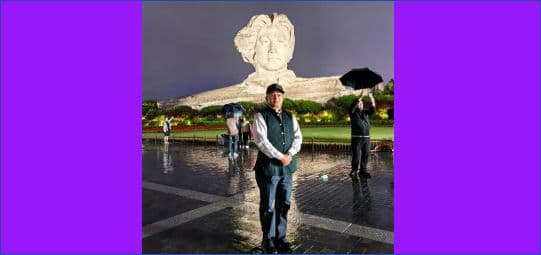
Located some distance from Changsha, Shaoshan village is the birthplace of Chairman Mao Zedong. There, the huge statue of Chairman Mao and the memorial area speak of the glorious history of the Chinese revolution. I have visited Shaoshan and paid my respects and tribute at the statue of Chairman Mao. While standing there, I remembered Nepal’s Mid Western region, from where the Nepali People’s War began. I have also paid tribute at the statue of Mao in his youth in the city of Changsha. Both places keep alive the revolutionary consciousness and the people’s resolve for liberation.
Nepal and Hunan: Possibilities for Cooperation
There are immense possibilities for political, cultural, tourism and trade exchanges between Nepal and China’s Hunan Province. A tourism bridge can be built between a natural treasure like Rara Lake and Hunan’s historical and cultural heritage. Hospitality centers such as the Rara Hotel in Changsha can help deepen people to people relations between citizens of the two countries. This shared cultural bridge carried by the name Rara holds the potential to further strengthen the warmth between the Nepali and Chinese peoples. The possibilities for cooperation in agriculture, tourism, education and cultural exchange between Mid Western Nepal and Hunan are limitless. This ideological and geographical connection between the birthplace of the Nepali Maoist movement and the birthplace of the Chinese revolution can take the friendship between the two countries to a new height. The convergence of China’s hospitality culture and Nepal’s natural beauty will certainly attract the citizens of both countries toward one another and further strengthen their relationship.
The blue waters of Rara, the surrounding greenery and the white mountains convince anyone that if there is heaven on earth, it is here. The hospitality found at the Rara Hotel in Changsha also offers that same feeling of heaven. Nepal’s Rara and China’s Rara Hotel are two different geographies, but both are symbols of the same human warmth. This lake is not only an incomparable gift of nature, but also a living symbol of friendship between Nepal and China. This convergence of the birthplace of revolution and nature’s paradise carries the potential to make relations between the two countries even deeper in the future.